
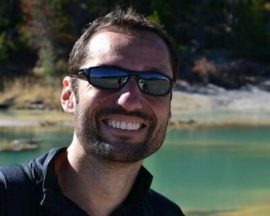
- Alexandre Anesio
- 13-17 January
Biogeochemical processes on glaciers and impact on downstream ecosystems
Description
Glaciers and ice sheets, like other biomes, occupy a significant area of the planet and harbour biological communities with distinct interactions and feedbacks with their physical and chemical environment. In the case of the glacial biome, the biological processes are dominated almost exclusively by microbial communities. Habitats on glaciers and ice sheets with enough liquid water to sustain microbial activity include snow, surface ice, cryoconites holes, englacial systems and the interface between ice and overridden rock/soil. There is a remarkable similarity between the different specific glacial habitats across glaciers and ice sheets worldwide, particularly regarding their main primary producers and ecosystem engineers. At the surface, cyanobacteria dominate the carbon production in aquatic/sediment systems such as cryoconite holes, while eukaryotic Zygnematales and Chlamydomonadales dominate ice surfaces and snow dynamics, respectively. Microbially driven chemolithotrophic processes associated with sulphur and iron cycle and C transformations in subglacial ecosystems provide the basis for chemical transformations at the rock interface under the ice that underpin an important mechanism for the delivery of nutrients to downstream ecosystems. This course will provide an overview of the biogeochemical processes occurring in glacial environments and the implications of this microbial activity to the biogeochemistry of downstream ecosystems.
Contents
Lectures will cover the following topics:
1. Microbial processes and chemical weathering reactions under glaciers
2. Microbial processes on glacial surfaces: impact on albedo
3. Biogeochemical processes in glacial downstream ecosystems: interactions with melting and nutrient export
4. Microbial diversity analyses and interpretation
5. Methods used in microbial ecology and biogeochemical processes
Practical exercises may include:
1. Microscopy analyses from glacial samples
2. Basic bioinformatics and analyses of microbial diversity
3. Interpretation of nutrient and microbial data, experimental design
Methodology
Teaching methods for this course involve a mixture of lectures, guided exercises (group work), and discussion of scientific articles.
Lecturer: Alexandre Anesio, Aarhus University, Denmark